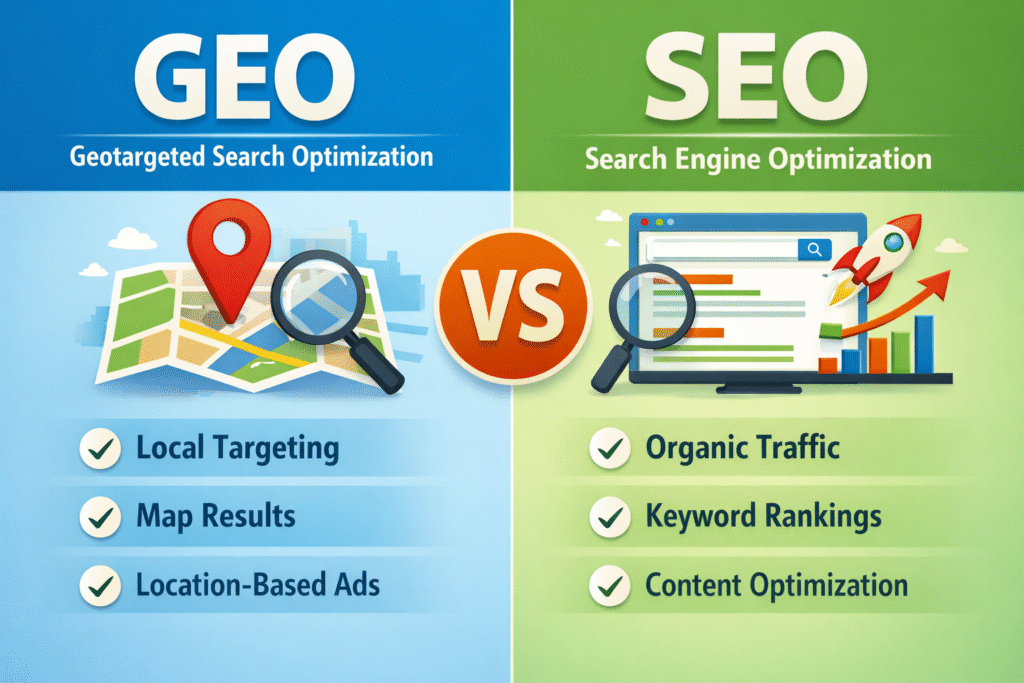
What is the Difference Between Generative Engine Optimization (GEO) and SEO?
The digital environment has been changing rapidly. For a long time now, brands have been concentrating their resources and efforts in Search Engine Optimization (SEO) in order to be listed in Google and other search engines. Yet today, a new contender has stepped into this arena: Generative Engine Optimization (GEO) — optmization designed specifically for AI answer engines such as ChatGPT, Gemini, Copilot, Perplexity, among others. It has become the need of the day for every business, marketer, and individual writer to know the meaning and difference between GEO and SEO. This is followed by a clear explanation of their differences and how you can benefit from each.
SEO, or Search Engine Optimization, is concerned with optimizing the site’s presence on
conventional search engines.
Main aims of “SEO
1 ] What Is GEO (Generative Engine Optimization)?
GEO targets the optimization of the content so that the choice and citation of the content in the answers given by the AI engines are optimal.
2 ] Main Differences Between GEO and SEO?
* SEO: Users enter searches and are provided with several links.
* GEO: Users pose questions to which one answer is synthesized.
3 ] Way generative engines think differently:
* They process information holistically
* They value clarity, organization, and the truth
* SEO: Click → Read → Convert <br>
* GEO: Read with AI endorsement → Click only if interested → Convert later
5] Technical improvements
* Quick loading pages
* mobile first design
* Clean URL structure
6 ] Use fact-driven content
* Statistics
* Use credible sources
* Avoid fluff and vague statements
7 ] structured formatting
* Numbered Lists
* Bulleted breakdowns
* Short paragraphs
SEO focuses upon
Backlinks
Keywords
Site authority
Technical performance
GEO priorit
Accuracy
Question-focused sections
Fact-based claims
Easy to Parse Structure
9 ] . How to Optimize for SEO
For better Search Engine Optimizations, the focus should
* Primary keywords
* Long-tail keywords
* Semantic variations
11 ] High-quality blog content
*Range for word count: 1,000-
*Strong Intros & Headers
*Attributive CT
12 ] Technical improvements
*Quick loading pages
*mobile first design
*Clean URL structure